Stock Valuation
Read QuarterlyIQ articles about stock valuation, including macro data, market context, forecasts, and investor-focused analysis.
8 articles

QuarterlyIQ vs. Simply Wall St: Which Is Better for Stock Research and Portfolio Monitoring?
Simply Wall St excels at visual research, global coverage, screening, and portfolio performance tracking. QuarterlyIQ takes a different approach: connecting company fundamentals, valuation expectations, management execution, thesis health, upcoming evidence, and portfolio-level monitoring into one ongoing research process. This comparison looks at where each platform is strongest and why QuarterlyIQ may be the better fit for investors focused on what happens after they buy.
 Investment Strategy
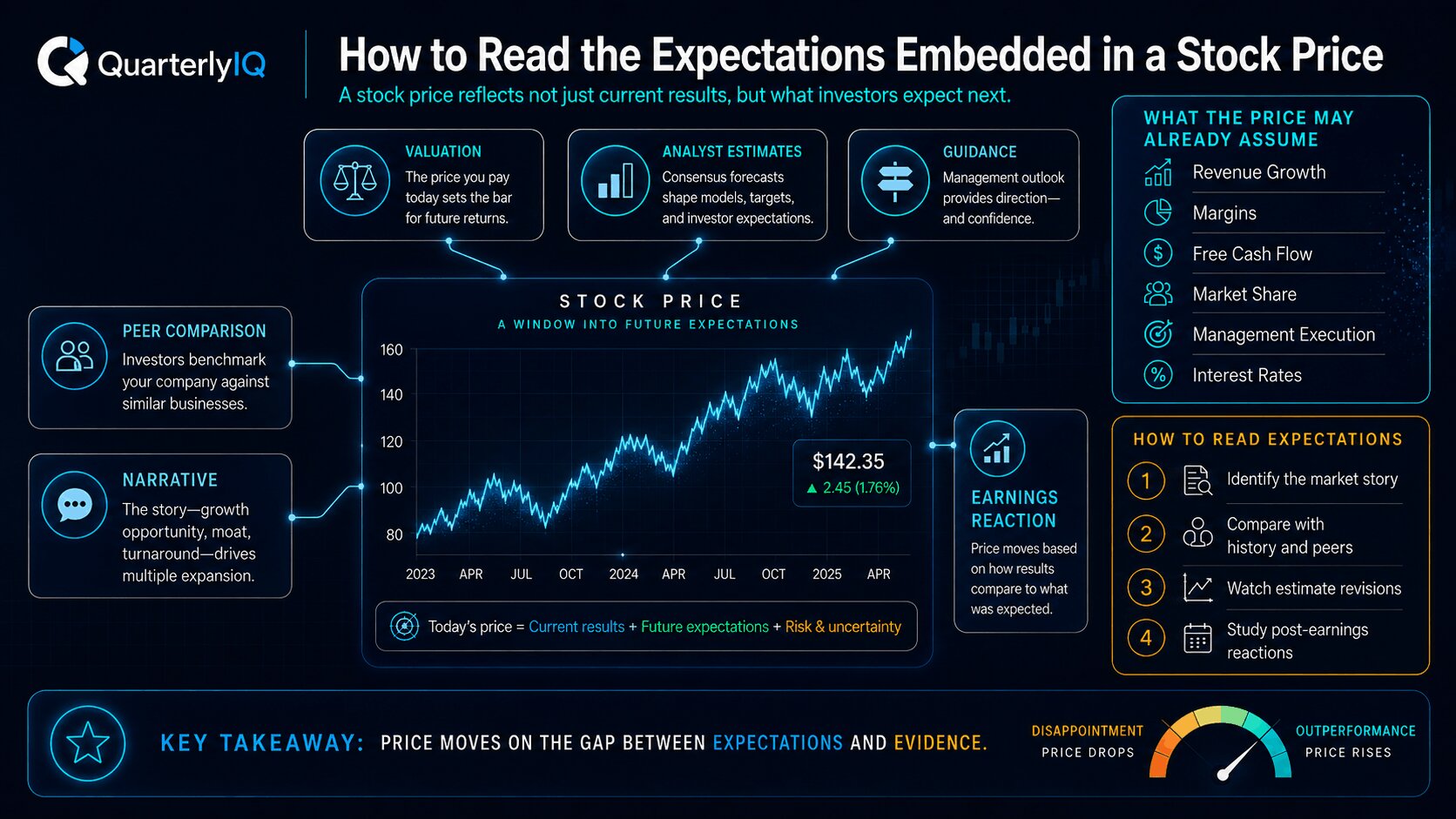
How to Read the Expectations Embedded in a Stock Price
A stock price is not just a reflection of what a company is today. It also reflects what investors expect the company to become. Here is how to read those expectations more clearly.
 Investment Strategy
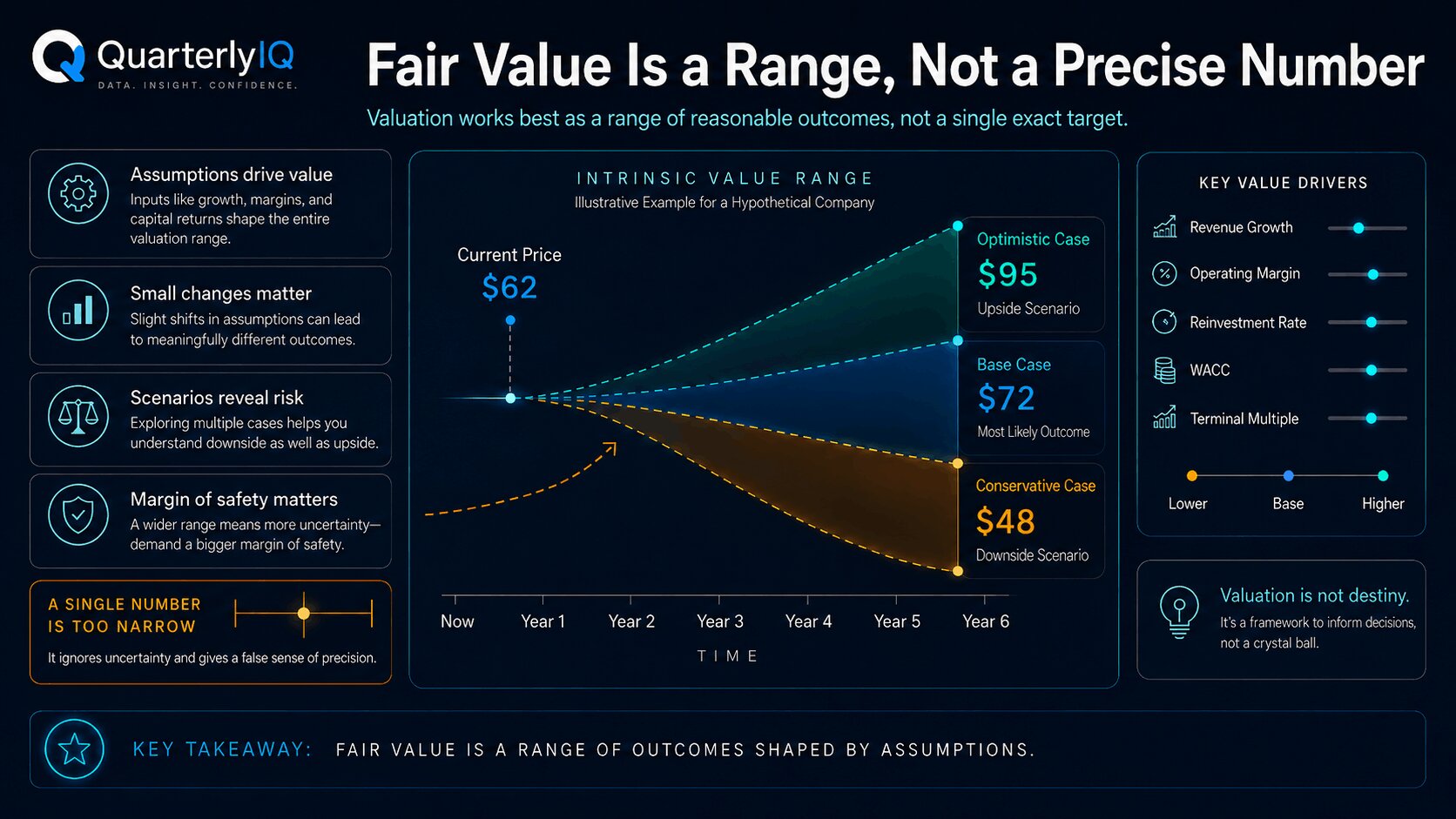
Fair Value Is a Range, Not a Precise Number
Investors often want one fair value estimate for a stock, but valuation is built on uncertain assumptions. A more useful approach is to think in ranges, scenarios, and evidence.
 Investment Strategy
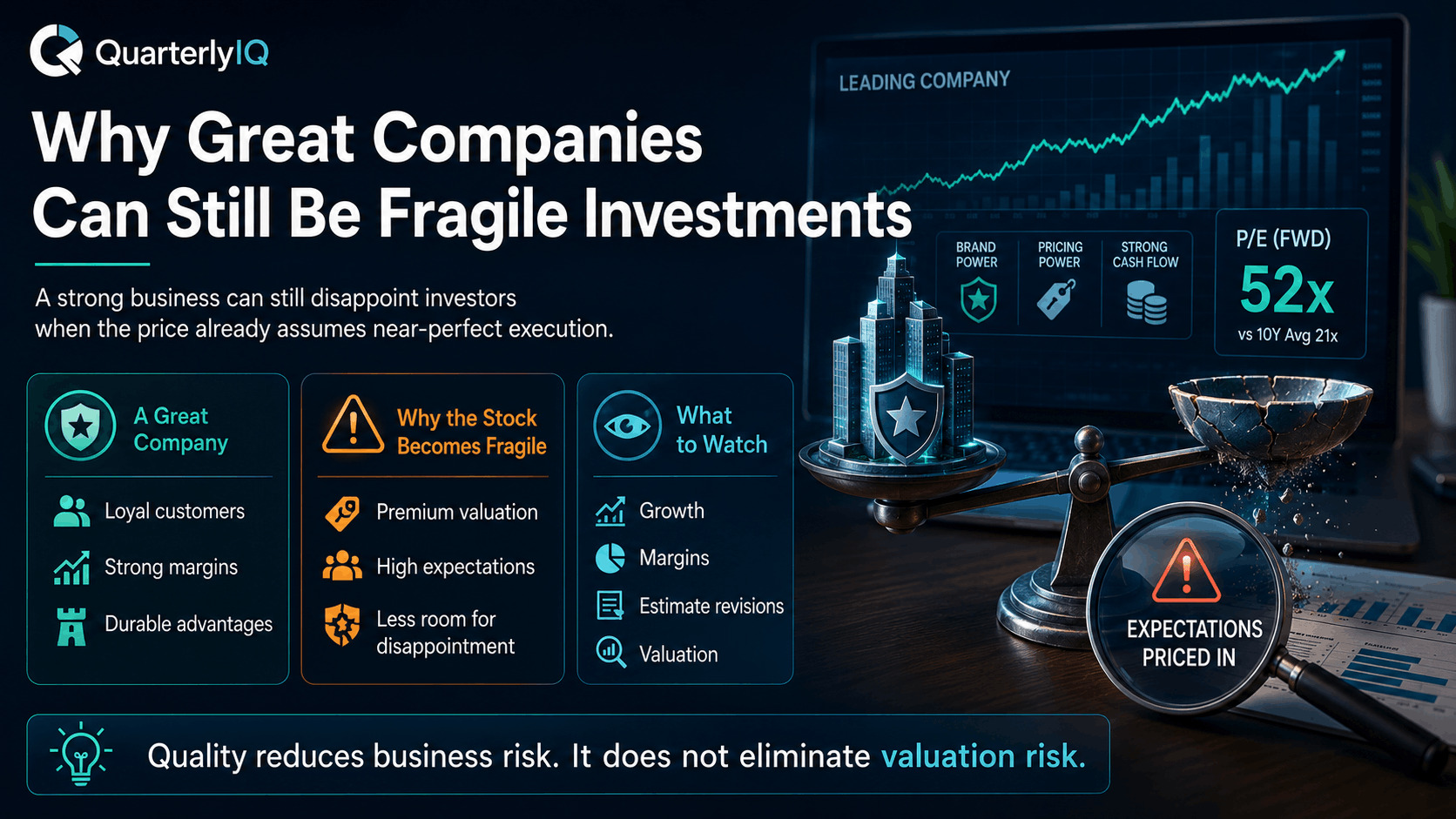
Why Great Companies Can Still Be Fragile Investments
 Investment Strategy
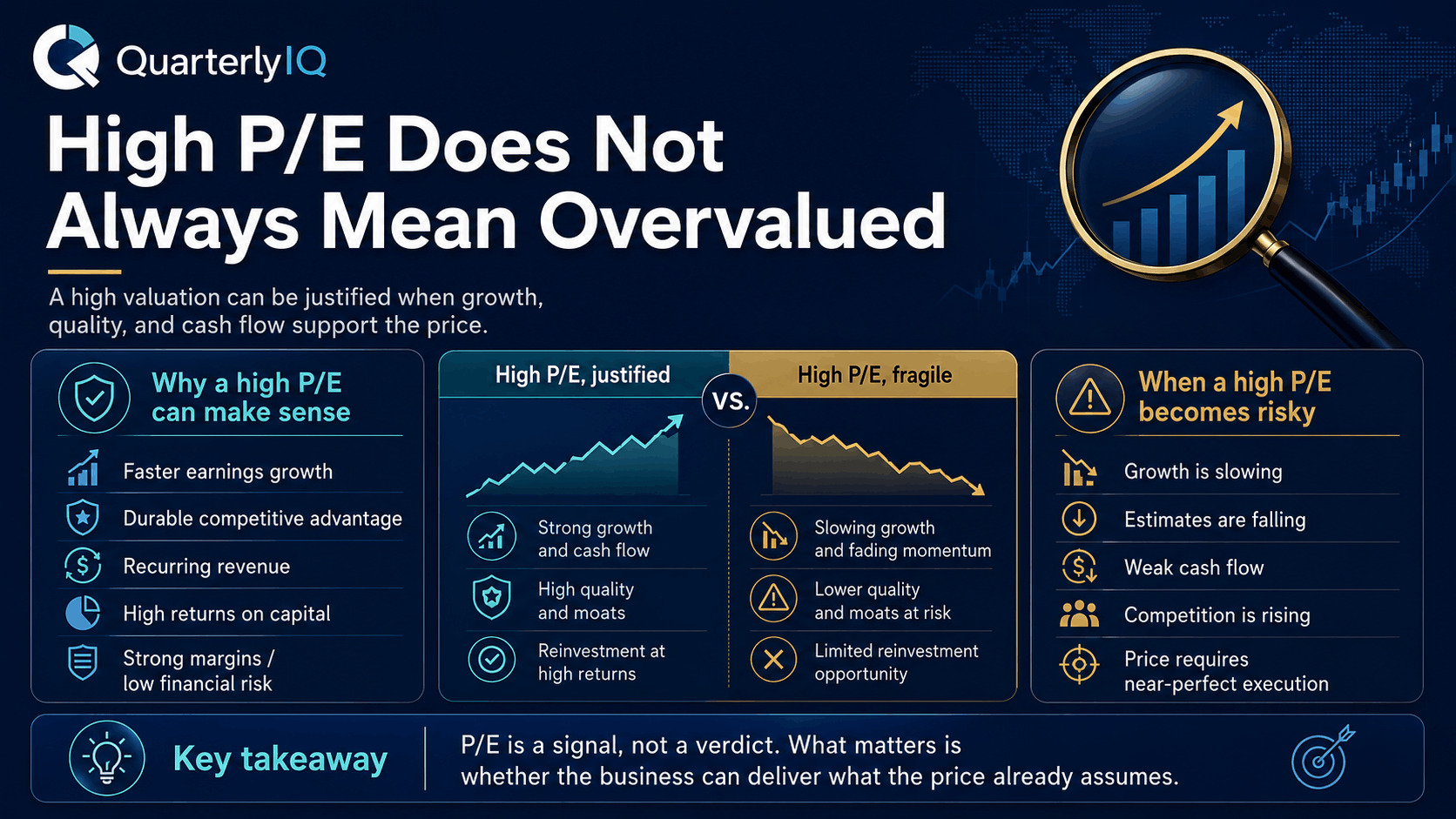
High P/E Does Not Always Mean Overvalued
A high P/E ratio can signal optimism, quality, growth, accounting noise, or valuation risk. The key is understanding what the price already assumes and whether the business can realistically deliver.
 Investment Strategy
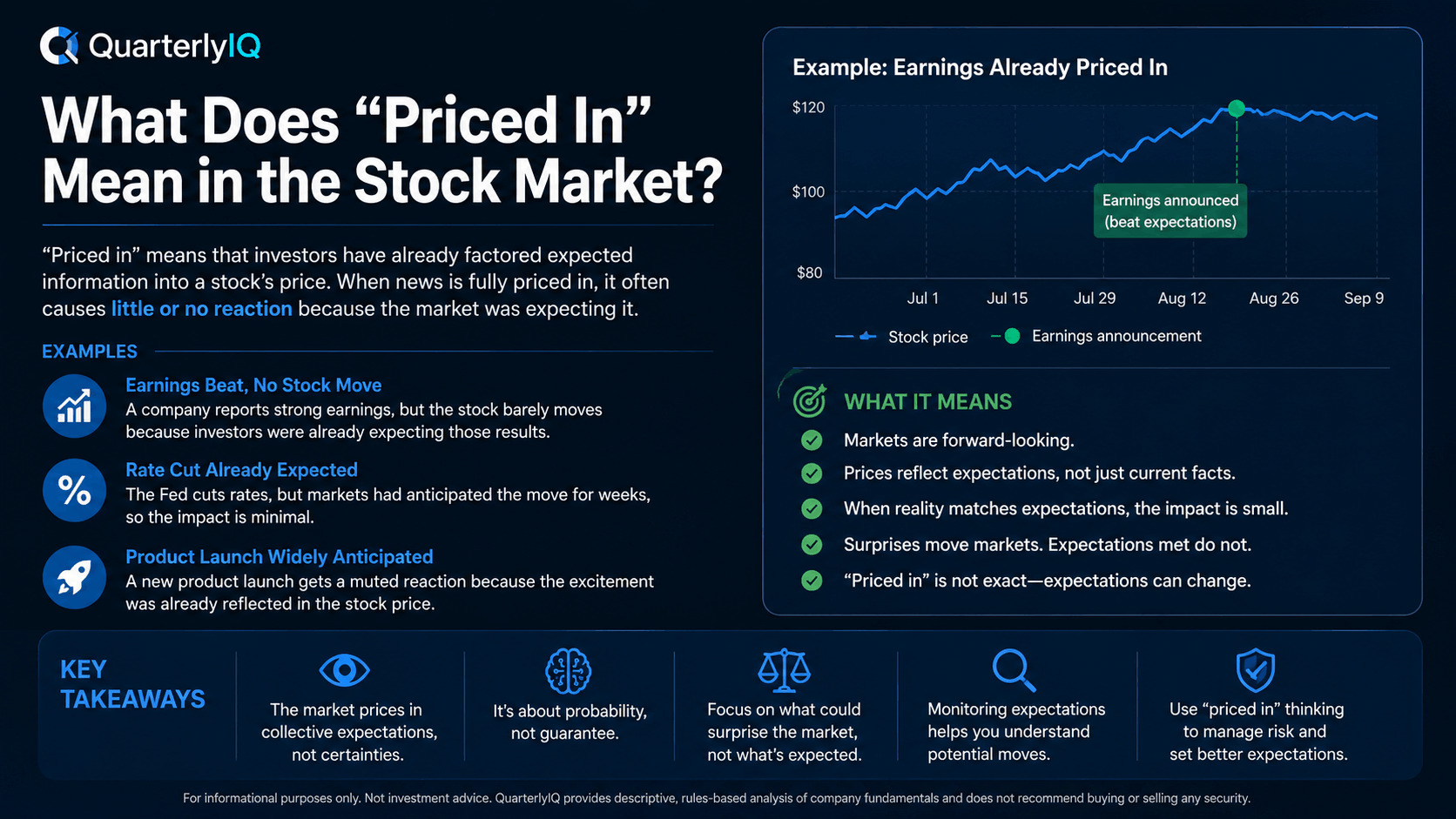
What Does “Priced In” Mean in the Stock Market?
Stock prices react to the difference between what happens and what investors expected. Understanding what may already be priced in can help you interpret earnings, valuation, and market reactions more clearly.
 Investment Strategy
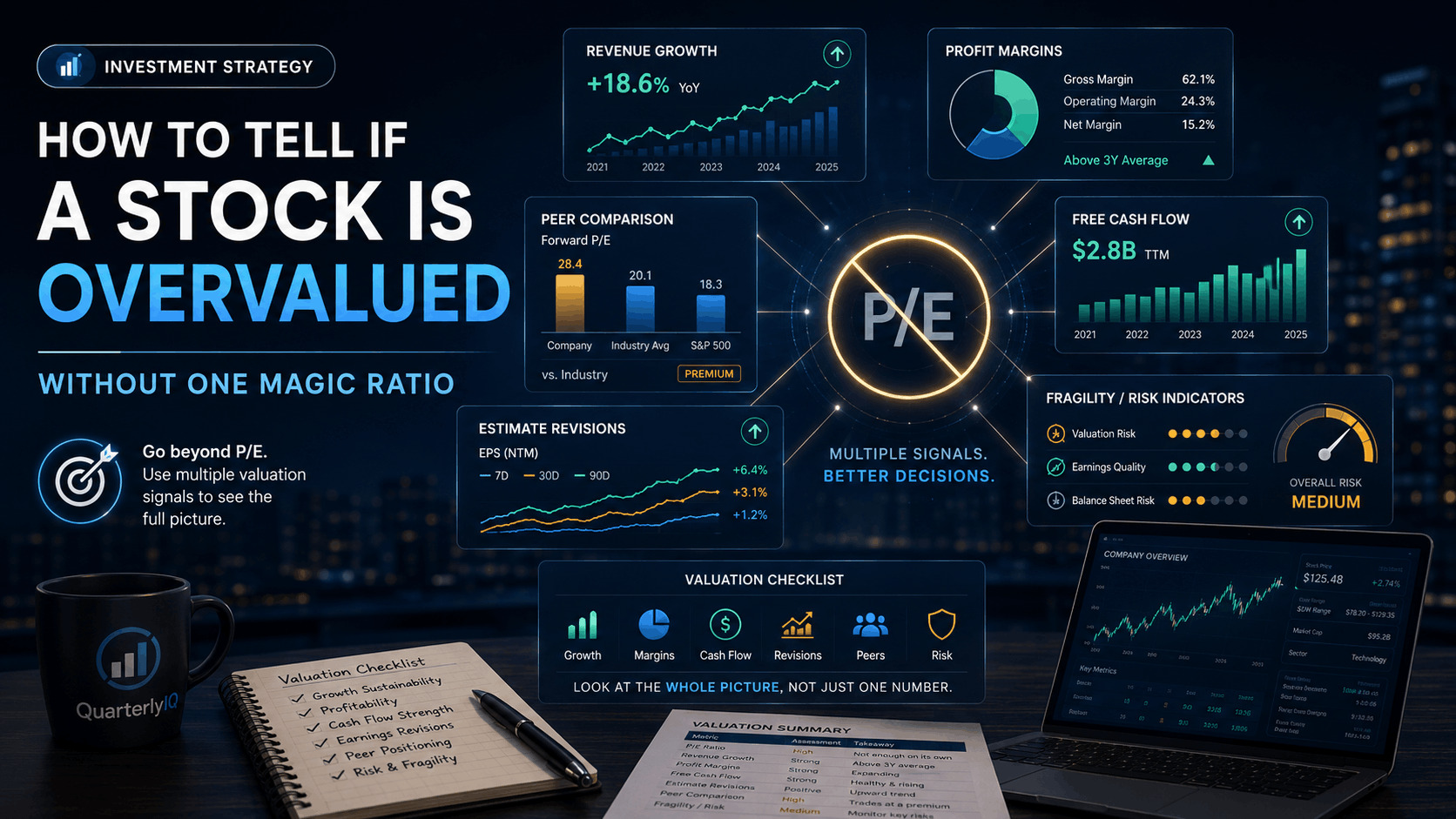
How to Tell if a Stock Is Overvalued Without One Magic Ratio
Valuation is not about whether a stock looks expensive. It is about what the current price expects from the business and how realistic those expectations may be.
 Investment Strategy
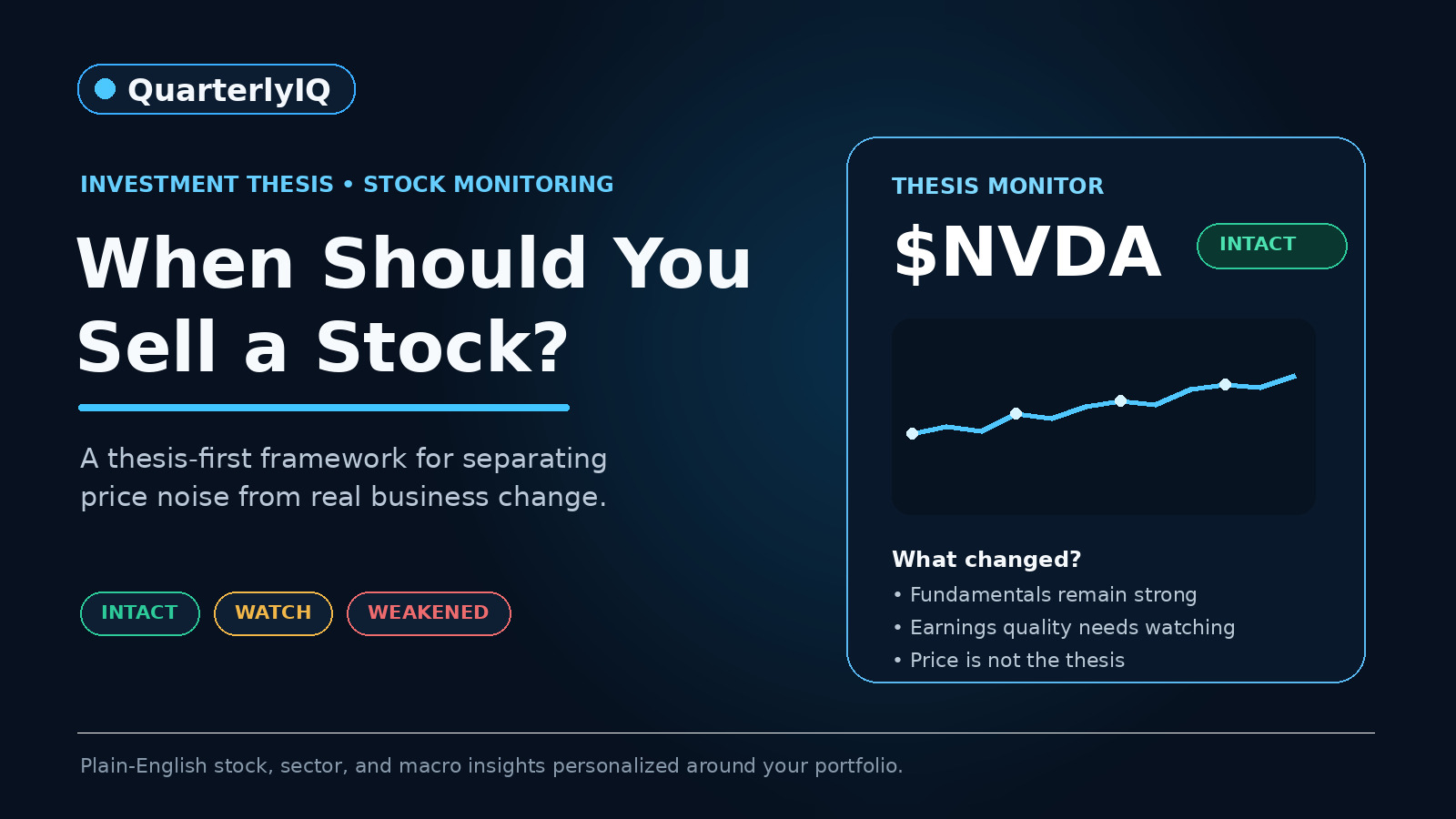
When Should You Sell a Stock? A Thesis-First Framework
The hardest part of investing is often not buying a stock. It is knowing when the original reason for owning it deserves another look.